
Holistic SEO
Content connected to every stage of the buyer’s decision.
Most SEO treats keywords as isolated targets: find a high-volume term, write a post, hope it converts. Real B2B and SaaS buyers do not move through isolated keyword silos. They move through research, comparison, and validation, in that order. This is the framework I run to connect content to each stage of that movement, so traffic turns into pipeline instead of stopping at a blog post.
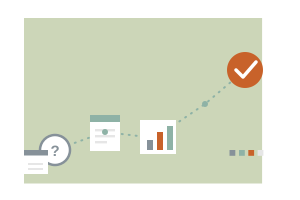
If you’re still narrowing down the problem
Holistic SEO is the practice of mapping content to the psychological stage a user is actually in, rather than to a keyword in isolation. A top-of-funnel article should point toward a middle-of-funnel resource, which points toward a bottom-of-funnel decision asset. Traffic without that connective structure is a vanity metric: it shows up in analytics and goes nowhere near revenue.
If you’re still working out whether this is your actual problem, the blog has more on search intent specifically, including a full breakdown in Intent-First Search Discovery. If you already know your content is getting traffic but not pipeline, keep reading.
Why this is different from what you’ve probably already tried
Most sites end up here after one of two patterns stops working:
Volume-first content
A calendar built around search volume and keyword difficulty scores, with each post treated as its own asset. Traffic climbs. Conversions don’t follow, because nothing on the page points a reader toward their next question.
Siloed teams
Informational content and transactional content get built and measured separately, often by separate people, so a blog post that ranks well never gets connected to the pricing page or case study that would actually move someone toward a decision.
We build content as one connected system instead: every piece tied to a specific stage of the user’s journey, with a deliberate path from the first search to the final decision.
The framework
Four stages, one connected path.
| Journey stage | Buyer’s core question | Intent type | Content format | What I measure |
|---|---|---|---|---|
| Journey stageUnaware to problem-aware | Buyer’s core questionWhy is this happening to my workflow | Intent typeInformational, broad | Content formatEducational guides, original research, trend reports | What I measureOrganic impressions, brand lift |
| Journey stageSolution exploration | Buyer’s core questionWhat strategies fix this issue | Intent typeInformational, investigative | Content formatComparison hubs, frameworks, template libraries | What I measureEngagement rate, scroll depth, internal click-throughs |
| Journey stageProduct evaluation | Buyer’s core questionIs this specific platform right for us | Intent typeCommercial investigation | Content formatAlternative pages, comparison charts, calculators | What I measureHigh-intent organic leads, assisted conversions |
| Journey stageDecision and purchase | Buyer’s core questionWhat are the exact terms and implementation path | Intent typeTransactional, navigational | Content formatPricing pages, case studies, implementation docs | What I measureDirectly attributed revenue, organic signups |
The rule underneath all four: no page is a dead end. Every article carries a specific, contextual link to the next stage of the reader’s research, not a generic call to action bolted on at the bottom.
What this catches that keyword-only SEO misses
A content audit built around this framework usually turns up the same gap: an over-indexed top of funnel and a dry middle and bottom. Plenty of educational posts, almost nothing that helps a reader compare options or check pricing once they’re ready to move. That gap is where traffic and revenue disconnect, and it’s invisible if you’re only looking at rankings and volume.
How we build the connected structure
This is the same cycle whether the project is a homepage rebuild or a single blog post optimized for how AI answer engines cite it.
Audit for coverage gaps
Map existing ranking pages against the four journey stages. Most sites are heavy at the top and thin everywhere else.
Group content into clusters
Anchor each major topic to a flagship pillar page, with supporting content linking upward using specific, intent-matched anchor text rather than generic phrases like “read more.”
Build the internal bridges
How a visitor actually moves through the site, mapped against real behavior, not assumptions about how people should navigate.
Track multi-touch attribution
Stop judging a blog post only on direct signups. Measure how efficiently it moves a reader toward the pages that do convert.
Built for two kinds of organizations
Most sites end up here after one of two patterns stops working:
B2B and SaaS companies whose buyers research across multiple sessions and sources before a sales call, and whose content needs to carry them from first search to signed contract.
SMBs competing without a dedicated content or SEO team, where a handful of well-connected pages need to do the qualifying work a larger team would split across many.
Common questions
Holistic SEO connects every piece of content to a specific stage of the user’s journey, from problem-aware research through solution exploration, product evaluation, and final decision, rather than optimizing individual keywords in isolation.
Traditional SEO often targets keywords as isolated goals. Holistic SEO ties each piece of content to the next logical step in a user’s research, so a top-of-funnel article links toward a middle-of-funnel resource, which links toward a bottom-of-funnel decision asset.
Ready to see where your content stands
If your website should be doing more holistic SEO, we should talk.
The right partnership turns your site into an asset that keeps improving as your strategy evolves.